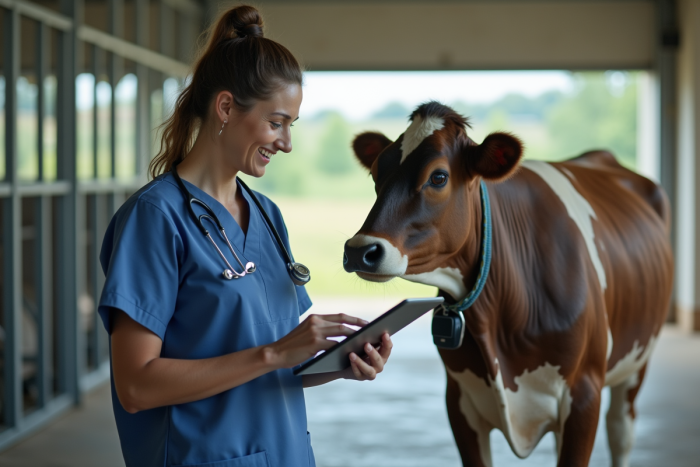
The automated monitoring of herds has allowed for the early detection of 30% of previously overlooked diseases in intensive farming. However, the majority of farms worldwide are still equipped with analog or outdated devices. Veterinarians report an increase in diagnostic accuracy thanks to biometric sensors, but unequal access to these technologies hinders their deployment.
AI platforms are now capable of adjusting the feeding of hundreds of animals in real-time, optimizing their growth while reducing medical treatments. The gap between technical promises and their adoption in the field continues to widen.
Digital technology, a new ally for animal welfare: current state and challenges
The development of technologies for animal welfare is transforming the management of farms at high speed. Centers like INNOZH or the Institute of Livestock (IDELE) play a key role: they promote connected agriculture and e-animal health to become everyday tools. The challenge? To put objective data at the service of automated monitoring that supports, without ever overshadowing, the human perspective.
Now, digital tools offer increased responsiveness to diseases, streamline herd management, and enhance traceability. Connected sensors, analysis platforms, alert systems: each innovation enables farmers to anticipate, adjust care, and improve animal welfare. The connection to GMVET is a striking example: it centralizes medical data and facilitates access to the history of each animal, meeting regulatory requirements while reassuring society.
But not everything is progressing at the same pace. The cost of equipment, the difficulty in mastering it, limited access to training, and weak network coverage in some areas hinder deployment. Feedback from LIT OUEST RÉEL or VetAgro Sup reminds us how essential it is to support innovations with solid human assistance, to interpret data and not be overtaken by machines.
Here are the main advancements brought by these digital tools:
- Improvement of working conditions for farmers
- Optimization of early disease detection
- Strengthening of traceability and welfare
The initiatives led by major names like INRAE and NeoTec-Vision illustrate the ambition to reconcile technological advancements with respect for animals, without ever sidelining the expertise and intuition of field professionals.
What innovations are concretely transforming the health and quality of life of animals?
Recent advances in technologies for animal welfare are disrupting practices and opening up unprecedented perspectives. Connected sensors are now established as everyday allies: they continuously monitor temperature, heart rate, activity, and feeding, producing a stream of collected data that farmers and veterinarians can leverage. This real-time monitoring detects signs of distress or illness more quickly.
The rise of artificial intelligence and deep learning now allows for in-depth analyses. Thanks to them, mountains of data from collars, intraruminal boluses, or pressure mats are scrutinized: algorithms detect the slightest signals of pain, stress, or illness, often before the human eye can perceive them. With smart cameras and 3D imaging, it becomes possible to evaluate posture, morphology, or even facial expressions to refine the understanding of both physical and psychological well-being.
At the same time, other tools like GPS sensors and tags facilitate the tracking of movements and social relationships among animals. Microphones decode vocalizations to provide insights into their emotional state. Drones, on the other hand, monitor large spaces without disturbing the animals, thus reducing stress related to human presence.
Here’s what these innovations concretely bring:
- Improvement in disease detection through behavioral and physiological analysis
- Strengthening of traceability through data centralization
- Support for animal welfare by assessing emotions and comfort
The arrival of machine learning in these devices changes the game on a daily basis: farmers have decision-support tools while retaining control over their choices and actions. Humans remain the conductors, but they are now supported by the power of digital technology. And this well-utilized tandem has everything to shape a future where animal health is no longer an abstract promise, but a measurable reality, day after day.