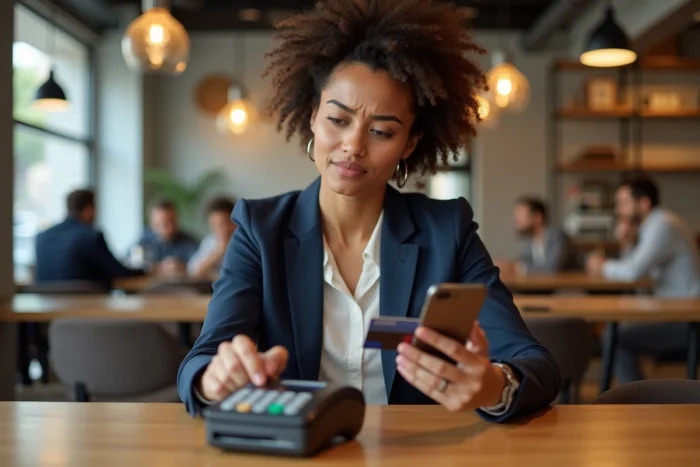
A declined payment doesn’t give any warning. No red light, no cryptic message: just that word that falls bluntly, “transaction declined.” Regardless of the account balance or the card’s validity, the operation remains blocked, with no immediate explanation. The rules imposed by the bank apply silently: hidden limits, usage restrictions depending on locations, automated blocks for security measures. And behind the terminal, fraud analysts monitor in real-time, even capable of rejecting a legitimate operation if the slightest doubt arises. When put together, these invisible filters sometimes leave the user perplexed, helpless in the face of an opaque system.
Understanding the different errors when making a card payment
Encountering a declined card payment is enough to completely halt any desire to buy. The terminal displays a few words, rarely explicit. Behind it, an unyielding mechanism: wrong code, expired card, lost password, or even a forgotten detail that triggers the security protocol. If the fault does not lie with the user, it is the fraud detection algorithm that pulls the brake. Unusual amount, behavior deemed suspicious, operation abroad? The machine acts without remorse, and the purchase falls through. To untangle these sometimes absurd or frustrating situations, the reasons for a declined card payment summarize, point by point, the most common pitfalls and indicate how to avoid them.
Why is your payment declined? The most common causes explained
Overview of frequent reasons
There are a whole series of situations, among the most common, that can explain why a card does not go through:
- Insufficient balance: if the account does not have the required amount, even a low purchase will be automatically rejected.
- Payment limit reached: each card has a limit, over a week or a month. Once exceeded, it is no longer possible to make any operation until the period resets.
- Blocked PIN code: three errors and the card freezes. It can only be reactivated by contacting the bank or through the app.
- Strong authentication failure: without two-factor validation (SMS or app confirmation), the transaction remains incomplete.
- Geographical or usage restrictions: by default, some cards prohibit purchases outside the euro zone, or to certain types of websites or online stores.
- Detection of a fraud risk: unusual purchases, travel abroad… A mere suspicion is enough to trigger a decline, even if everything is in order.
Sometimes it all comes down to minor details: a typo in the card number, an incorrect cryptogram, or an unstable internet connection at the time of payment. The automated systems then decide, without warning, to block the transaction.
Concrete solutions to limit the risk of refusal and secure your purchases
A refusal does not necessarily indicate a serious error. To reduce disappointments, it is enough to adopt a few reflexes: check the expiration date of the card, regularly adjust limits in the app, update banking details when moving or changing jobs.
Using a virtual card for online purchases, or mobile payment if the option is available, also helps reduce blocks while enhancing security.
Here are some concrete measures that simplify payment management:
- Activate alerts on your banking app: each attempt, whether successful or declined, is immediately displayed on your screen.
- Regularly renew your password and choose a really strong one for your online access.
Keeping your phone handy and charged has become essential: two-factor authentication via mobile is almost systematic during online purchases. And if the block persists, picking up the phone to call a bank advisor can resolve the situation faster than one might think. In the end, it is better to anticipate to avoid being at the mercy of sometimes overly zealous automations, and to regain a bit of freedom in every payment, no matter how mundane it may be.