
No text guarantees public figures an inviolable bubble. Despite repeated scandals and debates about media harassment, the reality remains relentless: the spotlight no longer just illuminates personalities; it now probes every corner of their surroundings, dissects the lives of their loved ones, and even intrudes into their private exchanges and health. The spotlight never truly goes out.
Between press freedom and the preservation of the private sphere, justice moves forward hesitantly. Courts oscillate, sometimes protecting, sometimes exposing, without ever drawing a clear line. In this legal blur, every personal detail transforms into a product, sometimes ripped from the deepest intimacy to end up in the public square, sold and consumed without scruple.
See also : Complete review and test of the Black & Decker GLC3630L20 trimmer
Why is the private life of celebrities so fascinating? Insights into a societal phenomenon
This pronounced taste for celebrity privacy is not limited to a mere appetite for gossip or a trivial distraction. It reveals, in the background, how society confronts intimacy, the desire to identify, and how we shape our own identities. Celebrity acts as a mirror, with everyone seeking a reflection of their own stories, impulses, or flaws. It’s no surprise that the slightest fragment of a star’s private space becomes a subject of curiosity, discussion, or even fantasy. Social media does not quell this thirst; it feeds it, stages it, and makes the boundary between public and private life more uncertain than ever.
This phenomenon has its roots in the history of celebrity. Antoine Lilti, a recognized historian, shows how, as early as the 18th century, a game of appearances and secrets was constructed: the more a public figure reveals, the greater the temptation to discover what they hide. Public curiosity then becomes a social engine, reinforcing notoriety while also undermining it.
See also : How the new name of Sorlav com strengthens your privacy protection
An example? The search for information about Zazie’s current partner perfectly crystallizes this mechanism: identity, connections, the slightest rumor… Everything is dissected, commented on, and shared on a large scale, both on forums and in news feeds. No sphere is spared: cinema, television, music, politics… As soon as someone becomes a public figure, their intimacy is exposed. This constant narration of feelings and private stories gives the illusion of closeness, but gradually erases the very notion of private space.
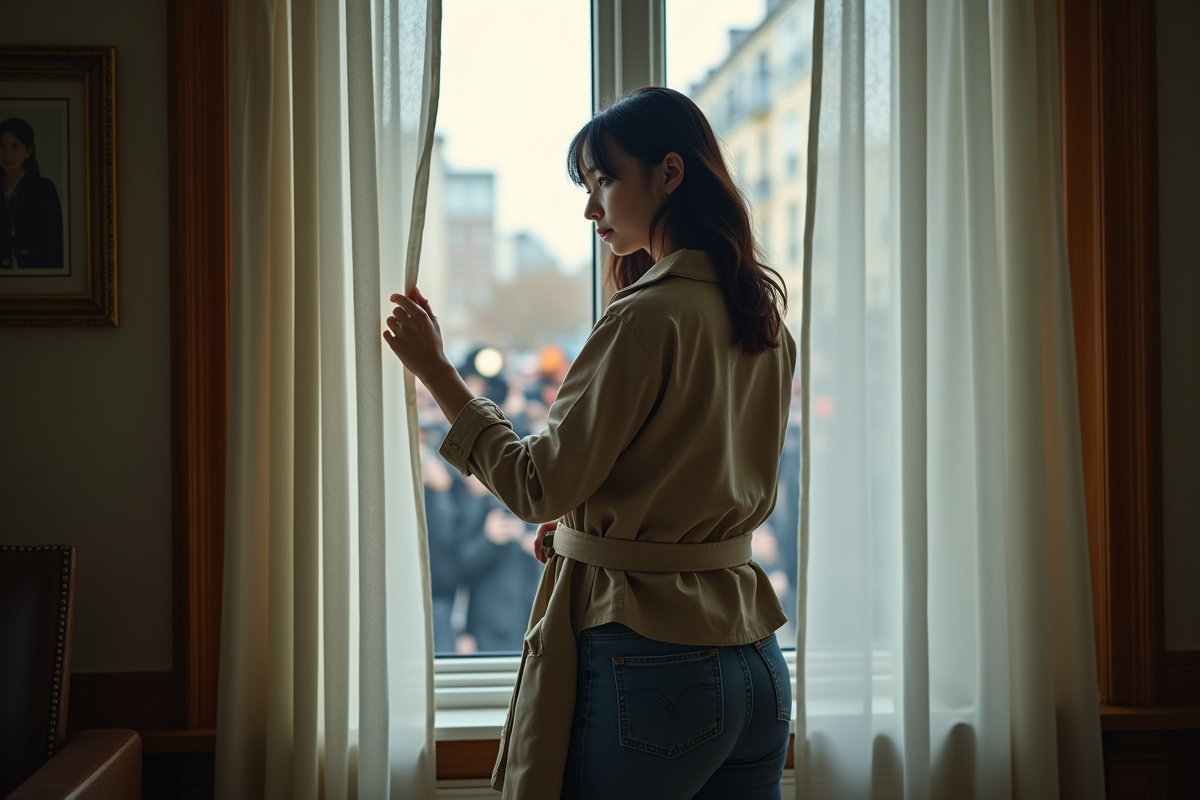
Between rights, psychological impacts, and exposed children: how far can public curiosity go?
The right to privacy is not just an abstract concept. Article 9 of the Civil Code, the law of July 17, 1970, the European Convention on Human Rights: all these texts attempt to outline a perimeter of protection, but reality remains fluid. Judges are regularly called upon to arbitrate between celebrities and the media, with the public interest sometimes colliding with the preservation of the private sphere.
Digital abuses constantly push the boundaries. Whether through revenge porn or the spread of fake news, control often escapes existing frameworks. Laws impose penalties, but the virality of content always gains ground over the ability to remedy violations. It only takes a click for everything to change.
The psychological repercussions extend far beyond mere celebrity. Children, sometimes thrust into the spotlight against their will, endure pressure and exposure whose consequences they do not yet fully grasp. The example of a singer like Zazie’s family reminds us that media coverage extends beyond the adult sphere, shaping childhood under the gaze of all, without these young ones having a say.
Overview of the main protection tools
Here is an overview of the main legal tools that delineate the protection of privacy against public curiosity:
| Tool | Scope |
|---|---|
| Article 9 of the Civil Code | Respect for privacy |
| Law of July 17, 1970 | Protection of individuals against invasions of intimacy |
| European Convention on Human Rights | Balance between private life and freedom of expression |
The curtain never truly falls on the media stage: as long as society demands fragments of intimacy, the boundary between admiration and intrusion will remain unstable, always ready to retreat a step. Who knows how far collective curiosity will be willing to go tomorrow?