Beauty trends evolve quickly, and autumn 2026 is no exception. With European regulations forcing brands to reformulate their products, hybrid textures blurring the line between makeup and skincare, and a completely reimagined in-store experience, the industry is undergoing significant changes. Here are the beauty updates that truly deserve your attention.
European Cosmetics Regulation: What’s Changing in Your Products
Have you noticed that some of your favorite products have changed their formula recently? It’s not a coincidence. European regulations require manufacturers to review their compositions on two major fronts.
The first concerns intentionally added microplastics. Rinse-off products (shower gels, shampoos, scrubs) are the first to be targeted by the reformulation requirement. Makeup, lip products, and nail polishes have a longer timeline, but the movement has begun.
The second change affects fragrance allergens. Since July 31, 2026, more than 80 fragrance allergens must be declared individually on the label as soon as they exceed the specified thresholds. Products already on shelves can be sold until July 31, 2028, under certain conditions, but new market entries must comply with this rule immediately.
To keep up with the latest news on Babioles Beauté, it’s a good reflex: understanding what’s happening in formulas allows for informed choices at the time of purchase.
In practice, this means that brands are massively reformulating, even on popular lines. Consumers who read labels may notice the emergence of new allergen names, where a simple generic mention sufficed before.
Skinification of Makeup: Why Skincare and Color are Merging
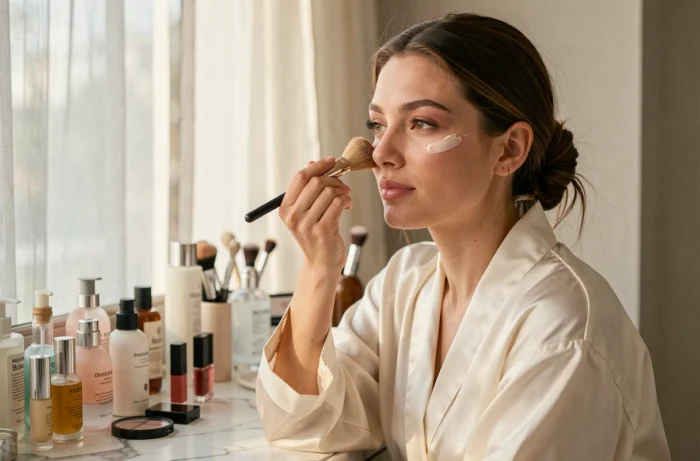
The term may sound technical, but the concept is simple. Skinification is the integration of skincare actives into makeup products. A foundation that hydrates, a blush containing hyaluronic acid, a mascara enriched with peptides to strengthen lashes.
This movement partly explains the strong performance of prestige makeup in the American market. Female consumers are willing to pay more for a product that serves dual purposes.
Three Criteria to Spot a Reliable Hybrid Product
- Check the INCI list: skincare actives (niacinamide, ceramides, botanical extracts) should appear in the first third of the composition to be present in significant quantities.
- Beware of vague claims like “enriched with vitamins” without specifying the concentration or the vitamin in question.
- Prefer brands that display effectiveness tests on the skincare aspect, not just on wear or coverage.
The trend is not limited to the face. Haircare is also incorporating actives once reserved for skin, and lip products are combining pigment and hydrating treatment in a more sophisticated way than just a tinted balm.
In-Store Beauty Experience: Physical Retail is Gaining Ground Against E-Commerce
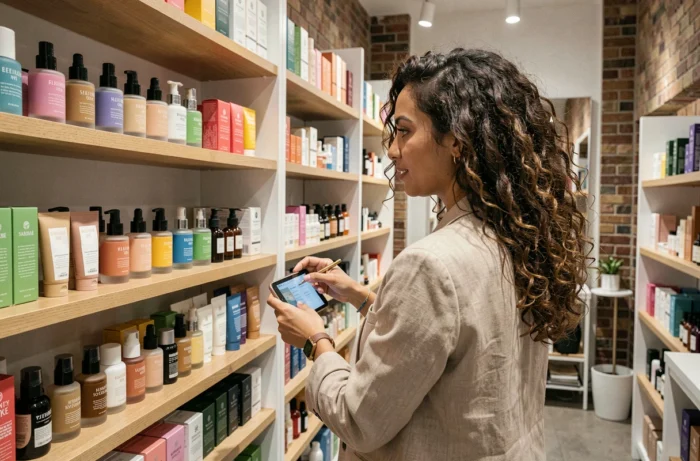
Buying a serum online is convenient. Testing a texture, smelling a fragrance, or seeing a pigment on your own skin tone is another matter. A survey conducted by WWD in September 2026 among 400 field team members confirms that the in-store experience is becoming a differentiation lever for beauty brands.
The observation is logical. E-commerce has captured a massive share of current sales (refills, products already tested). To justify the trip to the store, brands are betting on what the screen cannot replicate.
What Brands are Testing in Stores
Several axes are emerging. Personalized skin diagnostics assisted by digital tools allow for recommending suitable treatments based on the customer’s skin type on-site. Small group makeup workshops create a direct link between the advisor and the buyer.
The goal is not to transform every store into a spa. It’s more about offering a service that the website cannot provide: personalized advice, product testing, and above all, the ability to compare textures side by side.
Sustainable Beauty and Natural Cosmetics: Beyond Marketing Talk
Sustainability in beauty is no longer just about recyclable packaging and a green logo. Consumers are beginning to distinguish real commitments from superficial claims.
The gradual elimination of microplastics, mandated by European regulation, is pushing laboratories to seek credible technical alternatives. Reformulating a scrub without plastic microbeads while maintaining the same exfoliating effectiveness requires real formulation work, not just a simple ingredient replacement.
On the packaging side, the trend towards refillable formats is gaining traction, even in prestige makeup. Bottles designed to be kept and refilled reduce waste volume, provided that the refill system is genuinely accessible in-store or online.
- Labels (Cosmos Organic, Ecocert, Natrue) remain a useful reference, but they do not always cover packaging or the supply chain.
- Transparent brands publish the complete list of their ingredient suppliers and their quantified climate commitments.
- A “natural” product is not automatically gentler: some plant extracts can be irritating, and the absence of synthetic preservatives can reduce the product’s shelf life.
Autumn 2026 marks a period where beauty news is no longer limited to product launches. Formulas are changing due to regulation, textures are evolving towards hybrid skincare-makeup, and physical retail locations are seeking to become experiential spaces again. These underlying movements, less spectacular than a viral packaging on social media, are reshaping the industry in a lasting way.