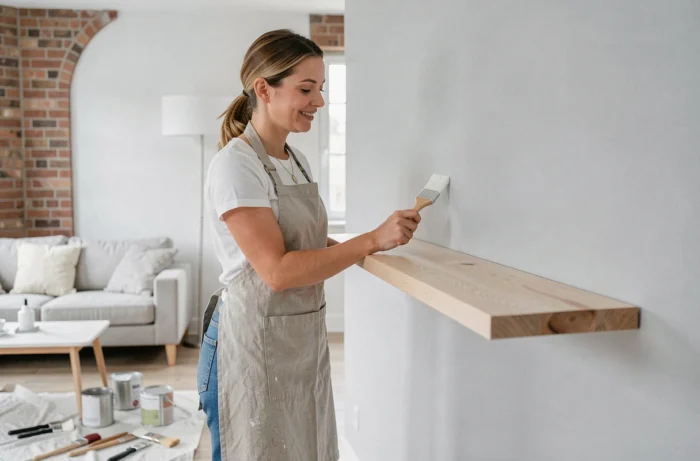
A well-insulated but poorly ventilated home accumulates moisture. A renovated kitchen with emitting materials degrades air quality. Improving your home on a daily basis is not limited to tidying up or decorating: the most sustainable gains come from technical interventions often overlooked by general guides.
Indoor air quality: the invisible worksite after a renovation
Strengthening the thermal insulation of a home without adapting the ventilation creates an imbalance. The envelope becomes more airtight, natural air exchanges decrease, and indoor pollutants (formaldehyde, VOCs emitted by furniture, glues, paints) stagnate.
The ADEME recommends systematically combining insulation with effective, controlled, or mechanically assisted ventilation. However, we observe that the majority of partial renovation projects neglect this aspect. A simple check of air passage under interior doors and air inlets on the facade is enough to identify a circulation defect.
You will find many practical sheets on the home section of Le Petit Gratuit, particularly on routine maintenance actions that complement these technical checks.
For homes equipped with a CO₂ sensor, the measurement must be interpreted with caution. Thresholds like 800 ppm serve as a reference in some public establishments, but no mandatory standard applies to private homes. The sensor remains useful as long as it is observed over several days and placed away from a window or ventilation outlet.
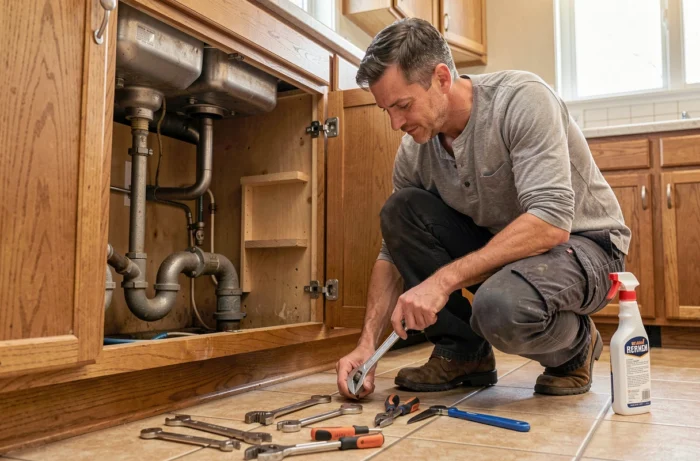
Maintenance of the VMC: a technical routine to integrate into daily life
The VMC is the mechanical lung of the home. Its gradual clogging reduces the extraction flow, promotes condensation in damp rooms, and can generate invisible mold behind furniture.
Cleaning the extraction vents is recommended every three months. A damp cloth and a wipe with warm soapy water are sufficient for kitchen and bathroom grills. Self-regulating vents often have an internal flap that needs to be unclipped to access the accumulated dust.
For a double-flow VMC, maintenance steps up a notch. Filters generally need to be replaced once or twice a year, according to the manufacturer’s instructions. A clogged filter decreases the efficiency of the heat exchanger and increases the electrical consumption of the fan.
- Extraction vents in the kitchen and bathroom: quarterly cleaning, checking the internal flap
- Air inlets on the facade or on joinery: dusting at least twice a year to ensure air renewal
- Double-flow VMC filters: replacement according to the frequency indicated by the manufacturer, generally every six to twelve months
- Flexible duct between vent and unit: annual visual inspection to detect crushing or detachment
Energy renovation: prioritize global projects over isolated actions
Renovation aids are evolving towards larger-scale renovations. The third version of the aid guide published in September 2026 confirms that some isolated packages for insulation, ventilation, and heating are no longer available. The logic now is to treat the building as a coherent system.
We recommend considering the bundle of work before launching a single project. Insulating the attic without addressing thermal bridges in the walls or checking the VMC yields disappointing results. The perceived comfort progresses little, and the risk of moisture-related pathologies increases.
Property tax exemption and energy works
Some local authorities offer a temporary exemption from property tax after energy renovation work. Conditions vary by municipality and type of work done. Checking eligibility before signing a quote avoids missing out on a concrete tax lever.

Materials and furniture: limit pollutant emissions in the indoor space
Paints, floor coverings, particle boards: each material introduced into the home potentially emits volatile organic compounds for weeks, sometimes months. Regulatory labeling (A+, A, B, C) provides an indication, but a product rated A+ is not emission-free.
In the kitchen, laminate countertops and low-end melamine cabinets are among the top emitters of formaldehyde. Favoring solid wood or low-emission panels significantly reduces the pollutant load.
- After installing a new covering, ventilate intensively for at least two weeks, ideally during temperate periods
- Store paints and solvents outside of living spaces, in a ventilated area
- Avoid scented candles and incense that add fine particles to air already loaded with new materials
Second-hand furniture: a choice that is both technical and ecological
A second-hand piece of furniture has already released most of its VOCs. After a few years, the formaldehyde emissions from a particle board decrease significantly. Choosing second-hand furniture for living spaces reduces exposure without compromising functionality.
Improving your home on a daily basis relies less on accumulating storage tips and more on attention to invisible parameters: air renewal, material quality, coherence of renovation work. It is these technical choices, often discreet, that sustainably transform the comfort of an interior.