A house exchange does not necessarily require perfect simultaneity of stays between participants. Some platforms allow for deferred exchanges, thus expanding the possibilities for organization. This mode of accommodation significantly reduces vacation costs while providing direct access to fully equipped housing. There are guarantees in place to secure transactions and limit risks associated with hosting strangers, thanks to review systems and profile verification.
House exchange: a friendly and economical solution for traveling differently
Emerging in the 1950s, the principle continues to revolutionize the way we think about vacations. Two households, sometimes separated by an ocean, decide to trust each other and exchange their homes, immersing themselves in a daily life that is not their own. Forget the impersonal hotel reservation: here, everything feels like real life. A shelf lined with already opened novels, an apron forgotten near the oven, or a calendar scrawled by children. The experience is unlike any other.
It is impossible to replicate the calibrated atmosphere of hotel chains: each home tells a story, each apartment welcomes with its little secrets. This means, concretely, tasting the routine of a neighborhood, following the codes of a street, and appropriating new landmarks for the duration of a stay.
This vacation mode has managed to attract many thanks to several very concrete advantages, including:
- Sometimes spectacular savings on accommodation costs, allowing for more enjoyment on-site (a dinner, a cultural outing, a local market)
- The comfort of a real living space, from a city studio to a family home
- The opportunity to be fully integrated into the local environment, far from standardized accommodations
Those who wish to get started can find detailed information on the terms by clicking here: discover house exchange with Echangimmo. One can immediately grasp what such a formula can offer in terms of authenticity and encounters.
Practical questions: how does it work and what checks should be done before starting?
The synchronized exchange remains the most common formula: families leave and host during the same time slots. However, with evolving expectations and digitalization, a whole range of variations has emerged. For example, deferred exchange allows stays to be organized at different times, significantly broadening the possible combinations. Other platforms introduce point systems: by hosting, one accumulates credits to use for future vacations elsewhere. This allows for more flexibility and freedom from a rigid calendar.
Before committing, it is wise to consult one’s home insurance. Some contracts already include this type of use, while others require an extension. Leading platforms also offer their own guarantees to reassure all profiles, both novices and seasoned hosts.
Registration on a specialized site rarely costs more than a few dozen euros per year, but provides valuable security: identity verification, a network of reviews, protected messaging, and a space for private exchanges. Before any trip, participants discuss essential points at length, such as arrival, house operation, management of any pets, and neighborhood tips. This transparency greatly reduces misunderstandings.
As for the available locations, their diversity is impressive: urban apartment, village house, seaside residence. Where the classic circuit offers visits and queues, house exchange encourages exploration of the neighborhood, chatting with neighbors, and trying out the bakery across the street. Nothing is fixed; everything becomes a lived experience.
Tips and tricks for successfully completing your first exchange with confidence
A serene stay begins with attention to detail. Sabrina and Violette, experienced hosts, prepare a personalized list before each exchange: instructions for the boiler, information on plants to water, good spots for shopping. This kind of precision simplifies life for their guests and leaves everyone with a real sense of comfort.
For his part, JeanMarin cannot imagine hosting without a welcome booklet: he includes useful addresses, explanations for each appliance, emergency numbers, and daily reference points. Providing this custom manual ensures that the stay starts off on the right foot and gives a little insight into the household’s habits.
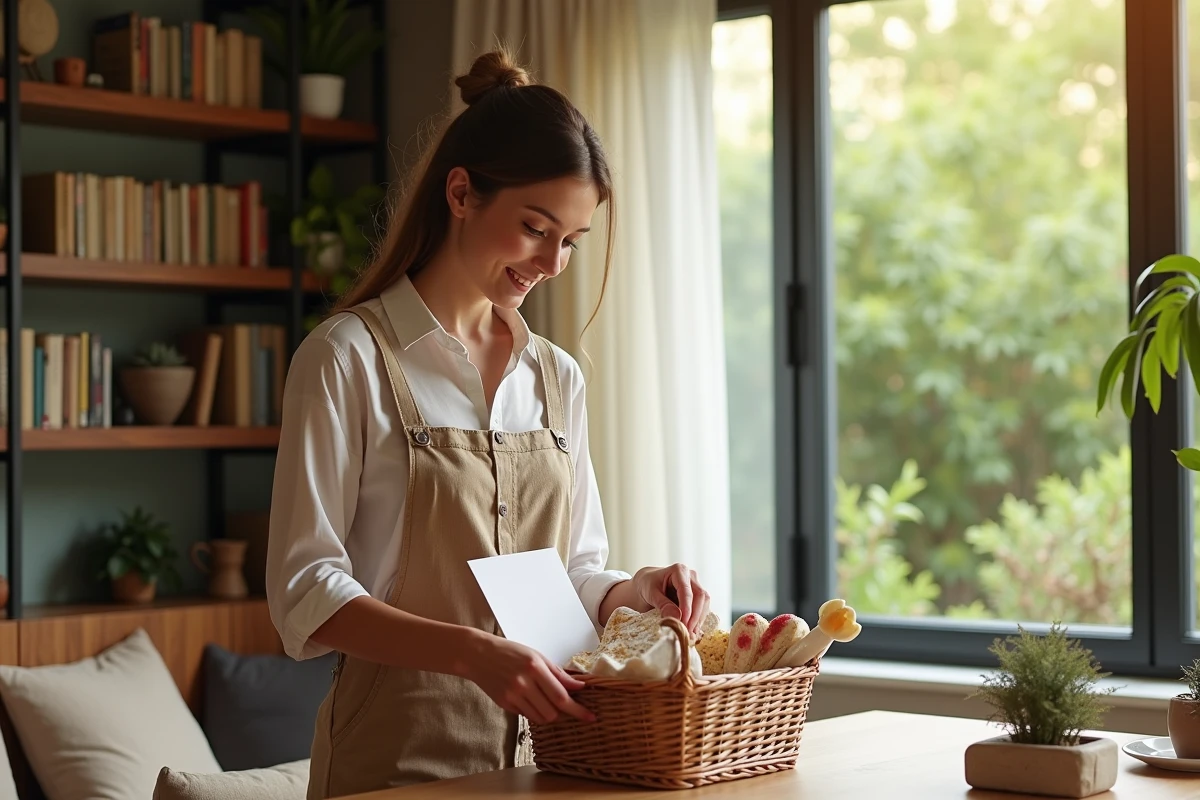
Preparing one’s home also means making space in the cupboards, putting away fragile items, thinking about leaving some basic products, and sometimes even a gourmet touch or a little welcome note. These gestures transform anonymity into hospitality, making the experience more human, both for visitors and for those lending their home.
The exchange can sometimes lead to unexpected situations: feeding a pet, trying out an old bicycle, meeting a spontaneous neighbor. Fanny, who discovered Lisbon from the inside, or Nathalie, a long-time exchange enthusiast, accumulate anecdotes and surprises. This is part of the charm: the home becomes a source of micro-adventures and sometimes, real beautiful encounters.
Closing the door, adjusting a cushion, leaving a page of history in a guestbook as a memento… House exchange is much more than just accommodation: it is about embracing the unknown, choosing the living imprint of travel, and giving one’s vacation an unexpected dimension, far removed from standardized habits.