The credit card-sized driving license does not withstand repeated friction in a wallet very well. The printing layer deteriorates, the information becomes unreadable, and a roadside check with a damaged license can be problematic. Properly taping your license requires a precise technical gesture, not just a hasty application of tape.
Laminating film versus standard tape: which adhesive truly protects the license
Standard transparent tape (office type) yellows within a few months due to UV exposure and body heat in a wallet. We recommend a matte or satin self-adhesive laminating film, cut to the exact dimensions of the card. This type of film, sold at stationery stores or online, offers significantly better abrasion resistance.
Wide packing tape (48 mm) is an acceptable alternative if laminating film is not available. Its width allows for covering an entire side in one strip, avoiding visible seams and air bubbles between two narrow strips.
Three criteria determine durability over time:
- The thickness of the adhesive: a film that is too thin (less than 40 microns) tears at the first friction against a neighboring bank card in the wallet
- The quality of the glue: acrylic adhesives withstand heat better than rubber-based glues, which soften in summer
- The surface finish: a matte film reduces glare and facilitates reading the information during a check
If you are looking to understand how to tape your driving license sustainably, the choice of material matters more than the application technique itself.
Bubbless application technique on a credit card-sized driving license
The surface of the license must be perfectly clean and dry. A wipe with a microfiber cloth is sufficient. Any fingerprint under the film will create a permanent bubble.
Start from a short edge of the card, not from the center. Peel back the protective film by one centimeter, align it with the edge of the license, and then gradually unroll it while pushing out the air with a rigid card (expired bank card, loyalty card). This scraping motion should be slow and steady.
Let the film extend one to two millimeters over each edge, then cut with a utility knife on a flat surface. Scissors create uneven edges that catch and peel off. A knife with a metal ruler provides a clean result.
We observe that the majority of poorly taped licenses exhibit the same flaw: the film has been applied on both sides without overlapping margins on the edges. Moisture seeps in through the unprotected edges. To avoid this trap, use a single piece of film that you fold over the edges, or apply a thin strip of transparent tape on each edge after applying both sides.
Taping your license and neurodiversity: adapting actions for ADHD or autistic drivers
Classic guides on preparing the license assume a standard level of concentration and fine motor skills. For a driver with ADHD, the meticulous application of the film can trigger frustration and lead to a sloppy result. For an autistic person, the adhesive textures and sticky contact on the fingers can pose a real sensory discomfort.
Breaking the task into micro-steps separated by breaks works better than a continuous tutorial. Prepare the materials in one session, clean the card in a second, and apply the film in a third. This segmentation reduces the attentional load of each phase.
For tactile sensitivity, thin nitrile gloves eliminate direct contact with the glue. The rigid card used as a scraper replaces finger smoothing, which is often unpleasant for sensory profiles.
One last point rarely addressed: the timing. People with ADHD achieve better results on precision tasks in the early morning or after physical activity, when attention is naturally more sustained. Applying the film after several hours of screen time almost guarantees a poor result.
Durability and replacement: when tape is no longer enough
A properly applied film protects the license for two to three years under normal usage conditions. Beyond that, the adhesive loses its stickiness on the edges, and micro-peeling occurs.
A license with partially peeling tape gives the impression of an altered document, which can complicate a check. In this case, it is preferable to completely remove the old film before applying a new one. A bit of isopropyl alcohol on a cotton pad dissolves glue residues without damaging the card’s print.
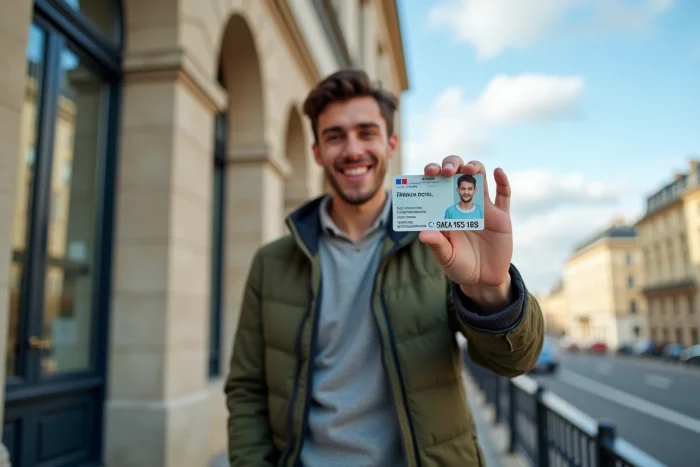
If the card itself is scratched, cracked, or if the photo is no longer identifiable, no tape will solve the problem. The request for a duplicate can be made online on the ANTS website. The reception time varies, but the process remains accessible from any browser.
Taping your driving license remains a preventive protection gesture, not a repair. Applied as soon as the document is received, with the right material and technique, it significantly prolongs the readability of the card and avoids unnecessary administrative procedures.